Before You Cut It Down: The Economics of Building Around a Mature Tree
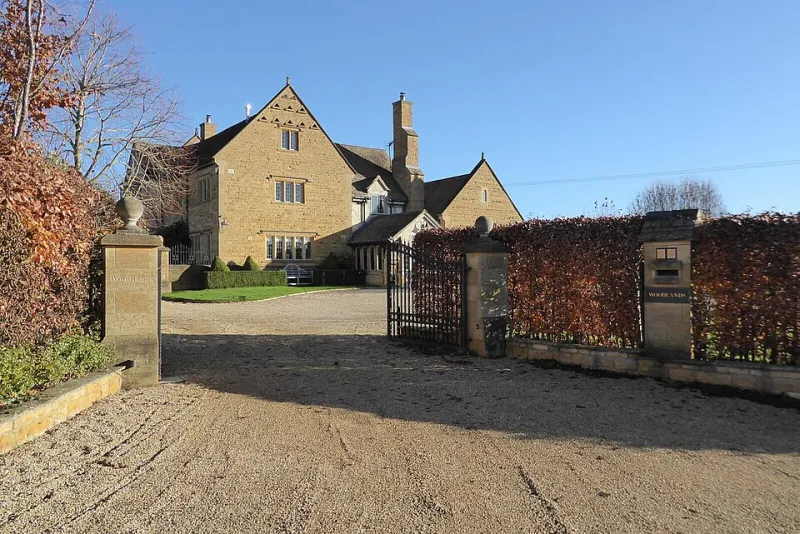
Photo: Philip Halling , CC BY-SA 2.0, via Wikimedia Commons
Every summer, across the American Sun Belt, the same scene repeats itself. A bulldozer clears a wooded lot in a single afternoon. The stumps are ground, the debris is hauled, and the grading crew enjoys a flat, unobstructed canvas. Six months later, a beautiful new house rises on that canvas — and its owners discover that the afternoon sun turns their west-facing great room into a greenhouse.
The tree that once shaded that corner of the lot is gone. In its place: a larger air conditioner, higher utility bills, and a decades-long obligation to mechanical cooling.
We see this differently from Ben Tre, a province in Vietnam's Mekong Delta where coconut palms are not obstacles to construction — they are the site plan. The lesson for American builders and homeowners is simple: the mature tree on your lot is an asset with a measurable dollar value, and destroying it is a form of self-imposed taxation.
What a Tree Is Actually Worth
Researchers at the USDA Forest Service have long quantified what arborists call the "energy conservation value" of mature shade trees. A single well-placed deciduous tree on the west or southwest side of a house can reduce summer cooling costs by 20 to 30 percent. Over a 30-year mortgage, that is easily $10,000 to $20,000 in avoided cooling expenses — before accounting for the stormwater management, wind buffering, and property value premiums that mature trees add, which studies consistently place at 3 to 15 percent of home value.
Now compare that to the cost of the alternative. Upgrading an HVAC system to handle an unshaded thermal load, adding attic insulation to compensate, installing solar screens or reflective coatings — the mechanical fixes routinely run $8,000 to $15,000, and unlike a tree, they depreciate, require maintenance, and eventually need replacement.
A tree, meanwhile, grows more valuable every year it stands.
The Ben Tre Model: Trees First, Footprint Second
In Ben Tre, known as Vietnam's "land of coconuts," builders have spent generations integrating homes into working groves. A house is not dropped onto cleared land; it is threaded between existing palms and fruit trees, its orientation adjusted so that the canopy shades the roof during the hottest hours while still allowing prevailing breezes to move through the structure.
This is not romanticism — it is economics practiced under constraint. In a hot, humid tropical climate, air conditioning was historically unaffordable for most households. Shade was not an aesthetic preference; it was the difference between a livable house and an oven. Builders who ignored it built houses nobody wanted.
The practice demands patience and flexibility from the design team. Setbacks shift. Floor plans rotate a few degrees. Driveways curve around a trunk. But the result is a house that starts with a cooling advantage no machine can replicate: a solar shield that is alive, self-repairing, and free.
Why American Site Planning Gets This Wrong
The American clearing habit is not born of ignorance about trees' benefits — it is born of incentive structures. Grading contractors quote flat lots faster and cheaper than wooded ones. Production builders optimize for repeatable templates, not site-specific designs. And mature trees carry perceived liabilities: root intrusion, storm damage, insurance complications.
These concerns are real, but they are manageable with planning rather than a chainsaw. An arborist consultation before design — typically a few hundred dollars — can identify which trees are worth keeping, which are hazardous, and where the buildable envelope should sit. Root protection zones can be fenced during construction. Utility routes can be adjusted. The cost of accommodation is almost always a fraction of the cost of replacement, whether that replacement is measured in cooling bills or in a 40-year wait for a sapling to become shade.
A Practical Framework for Tree-First Building
For American homeowners and small developers, we suggest a sequence borrowed from Delta practice:
- Survey before you design. Map every tree over six inches in caliper, noting species, health, and canopy spread at maturity.
- Orient the house to the canopy. Prioritize shading of west and south glass — the surfaces where solar gain does the most damage.
- Price the shade. Before approving a clearing plan, calculate the lifetime cooling cost of losing each significant tree. Put a dollar figure in the budget alongside the clearing quote.
- Protect during construction. Soil compaction and grade changes kill more retained trees than the bulldozer does. Fence the root zones and enforce them.
- Plant the next generation. Even in grove-managed Ben Tre, trees are replaced on rotation. A tree-first site plan should include new plantings positioned for the shade the house will need in 20 years.
The Cheapest Cooling You Will Ever Buy
There is a familiar temptation in American construction to solve every problem with a product. Shade is not a product — it is a living system, and it is already standing on many of the lots we build on. The choice to remove it is a choice to buy that shade back later, at retail, in the form of equipment, electricity, and emissions.
In Ben Tre, we build around the grove because the grove was there first, and because no compressor has ever matched what a mature canopy does quietly, every afternoon, at no cost. American builders would do well to adopt the same arithmetic. The most sustainable HVAC system is the one you never had to install — because the tree got there first.