Counting the Breeze: What Twenty Years of Cooling Costs Reveal About Passive Design
Photo: Federal Bureau of Investigation, Public domain, via Wikimedia Commons
Every construction budget has a line for the air conditioner and no line at all for the breeze. That asymmetry shapes American homes more than most buyers realize. In Ben Tre province, where afternoon humidity routinely sits above 80 percent and summer heat is a daily certainty rather than a July event, builders long ago stopped treating airflow as an afterthought. The houses that work there — and the ones we help design — treat ventilation as infrastructure, with its own budget, its own engineering, and its own payback schedule.
American homeowners making the same calculation face a different climate but the same arithmetic. Below is a side-by-side look at what twenty years of cooling actually costs, depending on how much of the work you ask the building to do instead of the compressor.
The Mechanical Baseline: Cheap to Install, Expensive to Own
A central air system for a 2,200-square-foot American home typically runs $6,000 to $12,000 installed. That figure feels manageable, which is precisely why it dominates decision-making. The costs arrive later.
- Electricity: A whole-home system in a hot-humid US climate (think coastal Carolinas, Gulf states, Florida) averages $900 to $1,600 per year depending on rates and thermostat discipline. Over twenty years, with modest utility inflation, that is $25,000 to $45,000.
- Maintenance and repairs: Annual servicing, capacitor replacements, refrigerant top-offs, and blower motor repairs add roughly $150 to $400 annually — call it $4,000 to $8,000 over two decades.
- Replacement: Most systems die between years 12 and 18. Budget one full replacement: another $8,000 to $14,000 in future dollars.
The honest lifetime figure for mechanical cooling alone lands somewhere between $37,000 and $67,000. Few buyers ever see this number before signing a construction contract, because it never appears on one.
The Passive Portfolio: Priced In, Not Added On
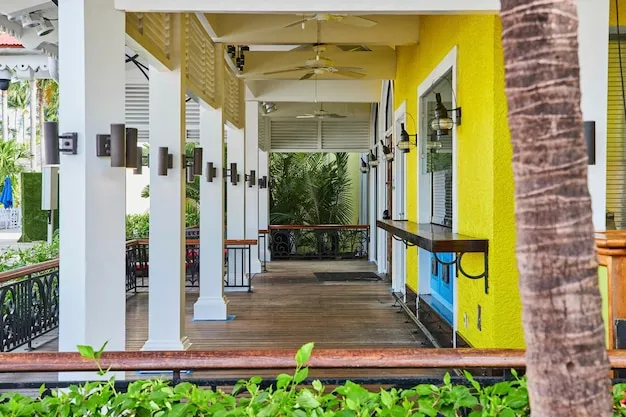
Ben Tre's traditional housing stock — raised floors, vented ridgelines, high operable clerestory windows, and stairwells positioned as vertical chimneys — was not romantic. It was cost engineering refined over generations in one of the world's most demanding cooling climates. Each feature has a rough American equivalent with a real price:
- Raised or ventilated floor assembly: $3,000–$7,000 over a standard slab. It reduces ground moisture load and lets the lowest band of the house breathe.
- Vented ridgeline with continuous soffit intake: $1,500–$3,500. This is the classic stack-effect engine — hot air exits high, cooler air enters low.
- Operable clerestory windows: $2,000–$5,000 above fixed glazing. High openings exhaust heat without compromising privacy or wall space.
- Cross-ventilated stairwell or central atrium: Often $0 in marginal cost. Relocating and detailing a stair as an airflow shaft is a design decision, not an equipment purchase.
Total premium for a fully passive package: roughly $8,000 to $16,000, amortized into the mortgage at today's rates — typically $50 to $90 per month.
Twenty Years, Side by Side
| Cost item | Mechanical only | Hybrid (passive + right-sized AC) |
|---|---|---|
| Upfront equipment & installation | $6,000–$12,000 | $4,000–$8,000 (smaller system) |
| Passive features | $0 | $8,000–$16,000 |
| Electricity (20 yrs) | $25,000–$45,000 | $10,000–$18,000 |
| Maintenance (20 yrs) | $4,000–$8,000 | $2,500–$5,000 |
| One replacement cycle | $8,000–$14,000 | $6,000–$10,000 |
| Twenty-year total | $43,000–$79,000 | $30,500–$57,000 |
The hybrid approach — passive features carrying the shoulder-season load, with a smaller air conditioner reserved for the worst weeks — typically saves $12,000 to $25,000 over two decades. In many markets the passive package pays for itself within six to nine years, then keeps paying.
A Checklist: How Much Breeze Can Your Lot Support?
Passive design is site-dependent, and honesty about your site matters more than enthusiasm. Before committing budget, answer these five questions:
- Which way does your prevailing summer wind come from? Cross-ventilation needs inlets and outlets on roughly opposite walls. A lot with a single street-facing exposure limits your options.
- What stands upwind? Neighboring two-story homes, walls of evergreens, or garage masses can kill ground-level airflow. Fencing and low landscaping, by contrast, often help.
- Can you build height into the section? Clerestories and vented ridges need interior volume. Flat-ceiling, low-slope designs forfeit the stack effect.
- How humid is your climate, really? In the humid Southeast, passive airflow excels at comfort but cannot control latent moisture during peak months. Plan for dehumidification even in a hybrid design.
- What does your local code allow? Some jurisdictions restrict natural ventilation as the sole compliance path. Confirm early whether passive features can count toward your energy code targets — many now can.
If you answer well on at least three of five, a hybrid strategy is almost certainly worth the premium. If your site fights you on most of them, invest instead in a high-efficiency, right-sized system and superior envelope sealing — the same discipline, applied where it will pay.
The Delta Lesson, Translated
Ben Tre's builders never had the option of cheap electricity, so they spent their money on geometry: height, openings, orientation, and airflow paths. American buyers now face utility bills that make the same logic unavoidable. The breeze is not literally free — it costs design attention and a modest construction premium — but unlike a compressor, it never needs refrigerant, and it never dies in year fifteen.
Budget for it accordingly.