Five Things Coastal Builders Get Wrong — and What a Salty Delta Province Figured Out Generations Ago
Here's an uncomfortable observation from a province that sits where the Mekong River meets the South China Sea: much of what passes for coastal construction in the United States wouldn't last five monsoon seasons in Ben Tre.
That's not an insult. It's an invitation. Ben Tre — a coconut-producing delta province where salt air, 100-inch annual rainfall, and typhoon exposure are simply the operating environment — has spent generations iterating on one question: what actually survives by the sea? The answers, refined through trial and error long before anyone wrote a building code, deserve a place in the American coastal construction conversation. Below are five places where US practice routinely falls short, and what the Delta does instead.
1. Fasteners Are the Whole Ballgame
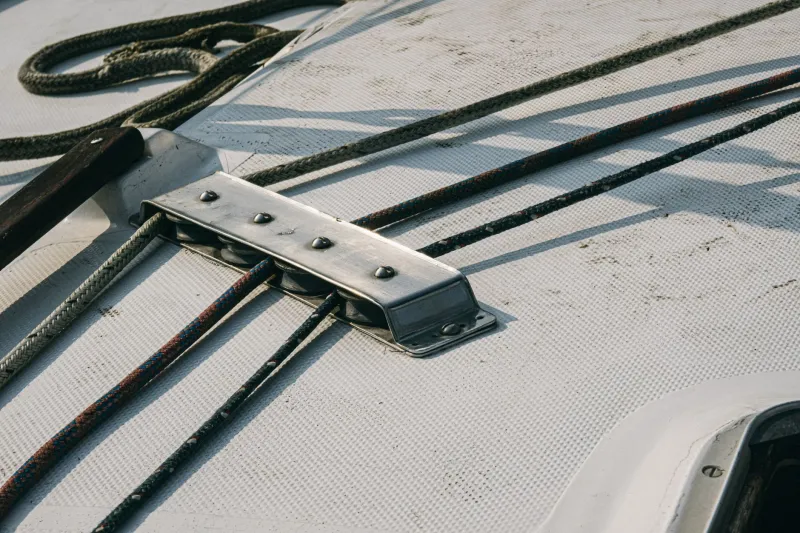
The single most common coastal building failure in the US is not structural. It's a screw. Standard electro-galvanized fasteners, and even many "coastal-rated" coated screws, begin corroding within years in salt-exposed environments — leading to loose decking, stained siding, and, eventually, compromised connections.
In Ben Tre, builders learned this lesson so thoroughly that fastener selection is a first-order decision, not a line item. Hot-dip galvanizing is treated as a floor, not a finish. For exposed or marine-adjacent work, stainless steel (316 grade) is the default, and dissimilar-metal contact — stainless screws in treated lumber, copper flashing against aluminum — is avoided with near-religious care. American builders specifying hardware for an oceanfront deck should adopt the same hierarchy: 316 stainless or nothing, with isolation washers and gaskets wherever two metals meet.
2. Concrete Needs Coverage, Not Just Strength
US coastal codes specify concrete mixes by compressive strength. Ben Tre practice adds a second criterion that matters more over time: cover thickness and mix chemistry. Salt-laden air and groundwater attack reinforcing steel through the concrete itself; once chlorides reach the rebar, spalling begins and the clock runs out.
Delta builders respond with generous concrete cover over reinforcement, low-permeability mixes, and careful curing — practices echoed by modern durability science but often skipped in cost-driven US residential work. For American homeowners commissioning coastal foundations, the actionable advice is simple: ask your contractor about rebar cover depth and chloride exposure class. If the answer is a shrug, hire a different contractor.
3. Choose Materials That Drink and Dry
Wood in a salt-humid environment faces a double threat: fungal rot from moisture and accelerated decay from salt crystallization. Ben Tre's traditional answer was material selection — dense, naturally durable tropical hardwoods and, increasingly, treated bamboo — combined with detailing that lets assemblies drain and dry. Roof overhangs keep rain off walls. Vented eaves let trapped moisture escape. Nothing is sealed so tight that it can't breathe.
The US equivalent: favor naturally durable or properly treated lumber, use rainscreen detailing behind cladding, and resist the temptation to caulk every gap. A coastal wall assembly needs a drying path more than it needs a perfect seal. Homeowners should also think twice about finishes marketed as maintenance-free; in salt air, nothing is maintenance-free, and materials that tolerate moisture — fiber cement, dense hardwoods, marine-grade composites — outperform those that merely resist it on paper.
4. Maintenance Schedules People Actually Follow
The most honest critique of American coastal building culture is that it treats maintenance as optional. Ben Tre's approach is almost the opposite: washing salt off surfaces, re-oiling wood, and inspecting metal connections are seasonal rhythms, as expected as planting season.
A realistic US coastal maintenance calendar, adapted from Delta practice:
- Quarterly: Rinse exterior hardware, railings, and fastener-exposed surfaces with fresh water (a garden hose, ten minutes per side of the house).
- Semiannually: Inspect and re-tighten visible fasteners; check for rust streaks, which are early corrosion warnings.
- Annually: Re-oil or reseal exposed wood; inspect roof edges, flashings, and any dissimilar-metal junctions.
- Every 3–5 years: Repaint or refinish cladding; replace any fastener showing pitting before it becomes a structural problem.
Total time investment: a few weekends a year. Total cost: a fraction of replacing a rotted deck or spalled foundation.
5. Design for the Storm You'll Get, Not the One You Hope For
Finally, Ben Tre builders assume failure is possible and design for graceful recovery. Roof geometry sheds wind-driven rain. Connections are redundant. Materials are chosen so that if a panel or board fails, it can be replaced individually without rebuilding the assembly.
That last principle — repairability — is nearly absent from US coastal construction, where integrated assemblies make small repairs expensive. Specifying cladding, decking, and trim as discrete, individually replaceable components is a Ben Tre habit worth importing wholesale.
The Takeaway
Durability by the sea isn't a product you buy; it's a set of decisions made early and maintained forever. Ben Tre's builders never had the luxury of pretending salt air was harmless. American coastal builders — and the homeowners who pay them — can't afford to pretend either.