From Coconut Grove to Construction Site: Tracing Ben Tre's Renewable Material Supply Chain
Ben Tre province produces more than 600 million coconuts annually, and for decades most of that bounty ended up as food products and mulch. What has changed in the past ten years is the fate of the rest of the tree. Today, coconut trunks that once rotted in fields are milled into dimension lumber, husks are pressed into fiber panels, and fast-growing bamboo from neighboring provinces is laminated into structural components that rival hardwood in performance.
For American builders watching domestic lumber prices swing and pressure mount to document embodied carbon, this emerging supply chain deserves a closer look.
What Actually Gets Harvested
The coconut palm offers an unusual proposition: the nut is the crop, and the timber is a byproduct. Trees stop producing commercially viable yields at around 60 years old, at which point farmers replant and the old trunks become available. Nothing is cut solely for wood, which gives coconut lumber a strong sustainability narrative compared with tropical hardwoods harvested from natural forests.
The material itself is dense, with a distinctive flecked grain. Properly treated, it performs well in flooring, wall panels, and light structural applications. Ben Tre's processing facilities have also refined the use of husk fiber — bound with low-emission resins into composite boards — and turned processing waste into activated carbon and growing media, closing the loop on nearly the whole tree.
Bamboo completes the picture. Clumping species cultivated on three-to-five-year harvest cycles supply the laminated beams and panels increasingly specified in both residential and commercial projects.
From Province to Port
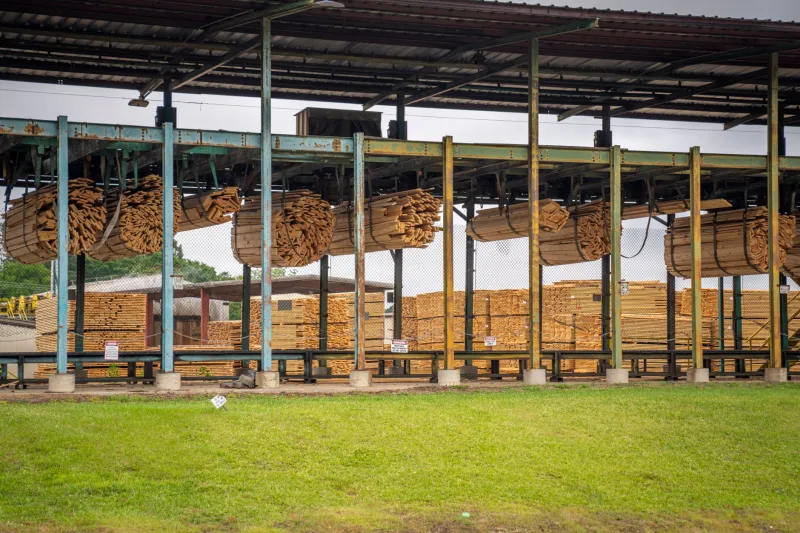
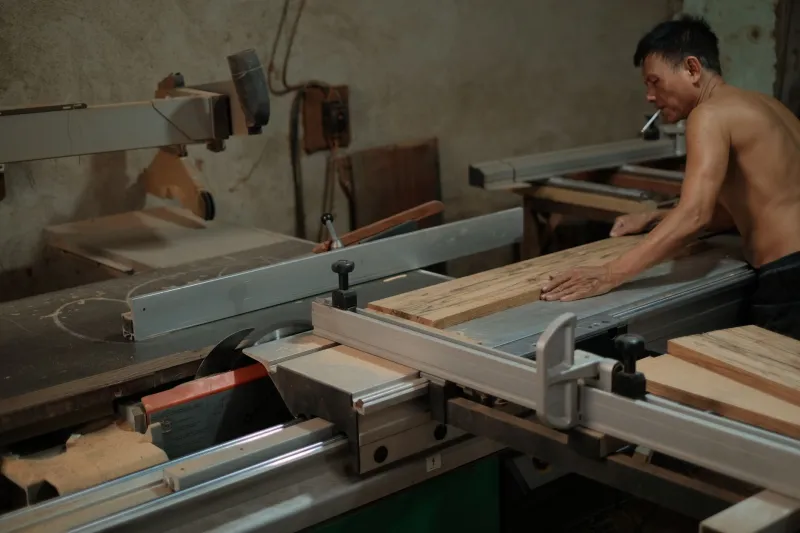
The journey typically begins with smallholder farmers, who sell senescent trunks to aggregators. Local workshops handle initial milling and treatment — a critical step, since untreated palm wood is vulnerable to borers and fungus. Vacuum pressure treatment with borate solutions, now standard among established Ben Tre processors, extends service life dramatically.
From there, material moves to larger facilities for kiln drying, lamination, and quality grading before traveling roughly 90 kilometers to ports serving Ho Chi Minh City. Container transit to US West Coast ports runs three to four weeks, meaning lead times of eight to twelve weeks are realistic for custom-ordered panels and flooring.
Why US Buyers Are Paying Attention
Three forces are converging. First, embodied-carbon accounting: projects pursuing LEED or state-level clean construction policies increasingly need documented low-carbon materials, and rapidly renewable options like bamboo and byproduct coconut wood score well on environmental product declarations.
Second, price stability. While domestic softwood framing remains the backbone of American construction, imported renewable materials are finding niches in flooring, decorative panels, and outdoor structures where their durability and appearance command premiums.
Third, design trends. The warm, figured grain of palmwood and the clean lines of laminated bamboo fit comfortably into the contemporary aesthetic driving much US residential work.
What to Verify Before You Buy
Not all exporters are equal, and buyers new to Vietnamese materials should apply the same diligence they would with any offshore supplier:
- Treatment documentation. Ask for borate treatment certificates and moisture-content readings at time of shipment. Kiln-dried material should arrive at 8–12% moisture for most US interior applications.
- Certification. FSC or PEFC chain-of-custody certification is available from larger processors and matters for LEED documentation. For bamboo, look for ISO-backed manufacturing standards and formaldehyde emissions data (CARB Phase 2 or TSCA Title VI compliance for composites).
- ** fumigation and customs compliance.** Solid wood packaging and products must meet USDA import requirements; established exporters will handle this routinely.
- Sample orders. Reputable suppliers expect this. Order small quantities and test for finishing behavior and dimensional stability before committing to a project volume.
A Local Perspective on Global Demand
At HTX Xanh Bến Tre, we work alongside the cooperatives and processors who built this supply chain from the ground up. What we see is an industry maturing quickly — better treatment protocols, tighter grading, and growing transparency — driven largely by the questions international buyers ask.
For US builders and importers, the opportunity is real, but it rewards partners who understand both the material and the region. Renewable materials from the Mekong Delta are no longer a curiosity; they are a documented, certifiable, and increasingly competitive option for projects that take sustainability seriously.
The groves of Ben Tre have been producing for centuries. The buildings they will help construct are just getting started.