From Grove to Gable: Five Regional Materials That Shrink a Home's Carbon Footprint
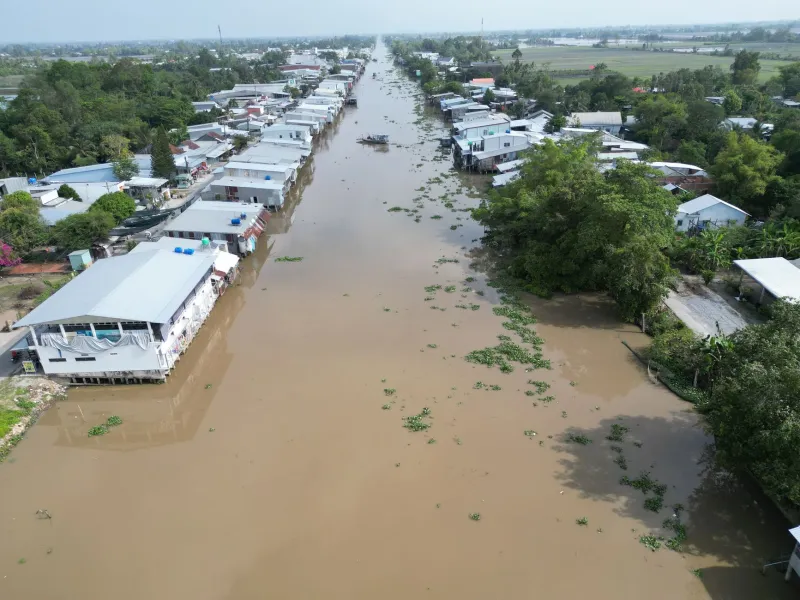
Ask any environmental building consultant what matters most when sourcing materials and you will hear the same answer: transportation. A sustainably harvested board shipped across an ocean can carry a larger carbon price than a conventionally produced alternative sourced nearby. That reality is good news for builders in Ben Tre, because our province sits on some of the most useful low-impact materials in Vietnam.
Here are five we specify regularly, with honest notes on cost and performance.
1. Coconut Timber: The Province's Underused Asset
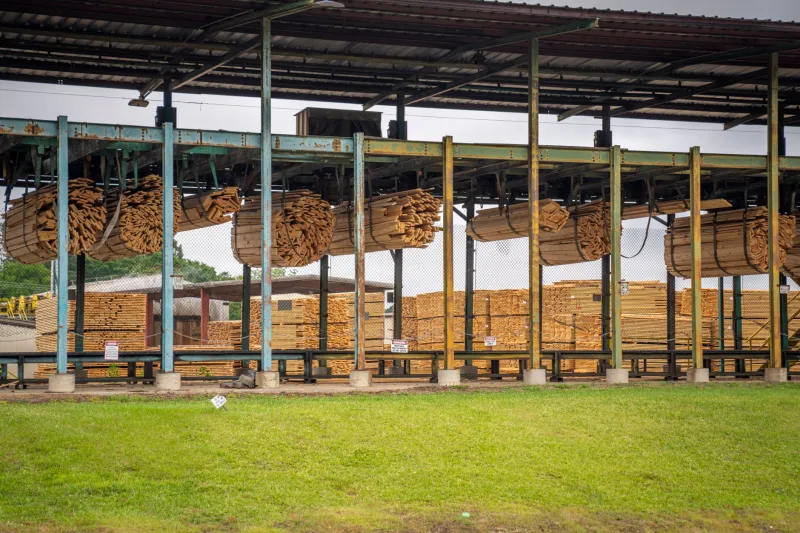
Ben Tre is Vietnam's coconut capital, with hundreds of thousands of hectares in production. What many outside the industry don't realize is that coconut palms past their fruiting prime — typically after 60 to 70 years — are felled and too often burned or left to rot. Processing that biomass into dimensional lumber turns an agricultural byproduct into a structural material.
The case for it: Coconut wood is dense, naturally resistant to termites in its outer layers, and visually distinctive, with a mottled grain that finishes beautifully. It performs well as rafters, flooring, wall cladding, and furniture.
The caveats: The inner core is softer than the dense outer shell, so proper grading matters. It also requires careful drying to prevent splitting. Costs are competitive with plantation hardwoods, and every purchase supports local processing cooperatives rather than distant suppliers.
2. Bamboo: Speed and Strength
No material grows faster. Certain bamboo species reach structural maturity in three to five years, and engineered bamboo products now rival steel in tensile strength for specific applications.
Where it excels: Scaffolding, roof structures, interior screening, and — with modern treatment — full structural framing. Treated properly against borers, bamboo lasts decades.
Watch for: Untreated bamboo deteriorates quickly. Insist on borax-based treatment and good detailing that keeps ends out of standing water.
3. Recycled and Salvaged Brick
Demolition across the delta yields a steady supply of fired brick that, when cleaned and sorted, performs nearly as well as new product at a fraction of the embodied energy. Reclaimed brick also carries character — subtle color variation that mass-produced units can't replicate.
Best use: Garden walls, paving, and non-load-bearing infill. Structural reuse requires inspection for salt damage, common in bricks salvaged from coastal sites.
4. Rice Husk Ash Concrete Blends
An innovation rather than a tradition: rice husk ash, abundant from delta milling operations, can replace a meaningful share of Portland cement in concrete mixes. The result is concrete with a smaller carbon footprint and, in some formulations, improved resistance to the sulfate-rich soils found in coastal zones.
Practical note: This is a specification decision best made with an engineer, but for foundations and slabs in Ben Tre's soil conditions, it's increasingly our default recommendation.
5. Compressed Earth Blocks
Unfired, compressed soil blocks — stabilized with a small percentage of cement — offer excellent thermal mass, keeping interiors cooler during the hot season and reducing air-conditioning loads. Production requires minimal energy compared with fired brick.
Trade-off: Earth blocks need protection from driving rain, typically via generous roof overhangs and lime render. In return, they deliver walls that manage humidity naturally.
The Bigger Picture
A home built largely from coconut timber, bamboo, and reclaimed brick within Ben Tre keeps its embodied carbon dramatically lower than a conventional build — and keeps its money in the provincial economy. For American readers, the logic will feel familiar: it's the same farm-to-table thinking applied to construction.
Green building, at its best, isn't exotic technology. Sometimes it's simply paying attention to what the ground beneath you already provides.