Waste Not, Build Smart: A Buyer's Framework for Coconut Husk Panels, Rice Husk Boards, and Other Farm-Byproduct Materials
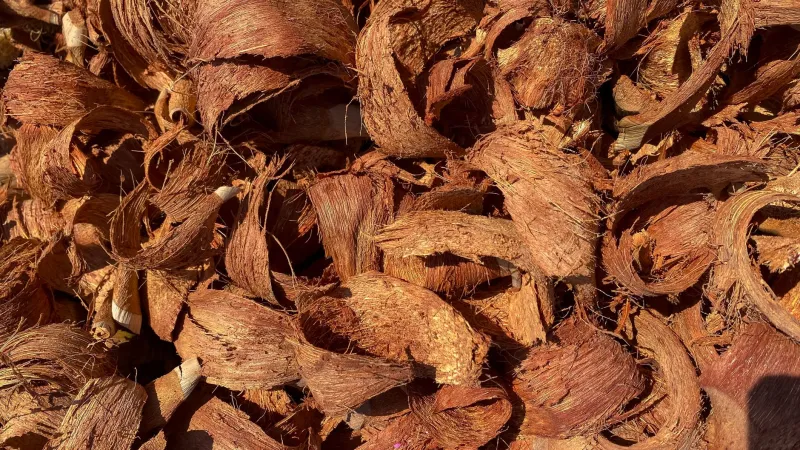
Somewhere in Ben Tre province right now, a coconut that was pressed for oil or milk has left behind a husk. A decade ago that husk was likely burned or left to rot. Today, in facilities scattered across the province — the self-declared coconut capital of Vietnam — it is being defibered, bonded, pressed, and loaded into containers bound for ports in Los Angeles, Houston, and Savannah.
Agricultural byproduct composites are having their commercial moment. Rice husk particleboard, coconut coir panels, and palm fiber boards promise the holy trinity of modern specification: credible environmental credentials, competitive performance, and a price point that undercuts tropical hardwood. But novelty in construction materials always outruns the standards that should govern it. For American homeowners and developers evaluating these products, the difference between a genuine innovation and an expensive liability comes down to the questions you ask before signing.
Question One: What Is Actually Holding It Together?
Every composite board has two stories: the fiber and the binder. The fiber is what gets marketed. The binder is what determines whether the panel survives a humid summer.
Pressboard made from rice husk or coir typically relies on either petroleum-derived resins (MDI, phenol-formaldehyde) or emerging bio-binders such as lignin and tannin-based adhesives. Neither is automatically bad — but each carries different implications for off-gassing, moisture performance, and end-of-life recyclability. Ask the manufacturer to specify the binder chemistry and to document formaldehyde emissions against CARB Phase 2 or TSCA Title VI, the standards that govern composite wood products sold in the United States. A producer who cannot answer this question in writing is not ready for the US market, whatever their brochure says.
Question Two: Has It Been Tested by Anyone You've Heard Of?
The byproduct composites sector is international by necessity — the raw material grows where the crops grow — which means testing can come from laboratories a buyer has never encountered. Reputable Vietnamese manufacturers increasingly pursue third-party verification precisely because they anticipate this skepticism.
Look for ISO/IEC 17025-accredited lab reports covering the properties that matter for your application: modulus of rupture and internal bond strength for structural-adjacent uses; thickness swelling after 24-hour water immersion for anything near plumbing or in humid climates; and dimensional stability data across humidity cycles. For decking and cladding, demand results from recognized standards — ASTM D7031 for mechanical performance, ASTM D1037 for wood-based panel properties — not a manufacturer's own marketing summary.
Question Three: What Happens in a Fire?
This is the question that quietly disqualifies many imported composites, and the one a salesperson is least eager to discuss. Organic fiber boards are, fundamentally, fuel. The relevant performance hinges on density, mineral additives, and binder chemistry — and on whether the product carries a recognized fire rating.
For interior finish applications in the US, ask for ASTM E84 Class A, B, or C flame spread and smoke developed indices. For exterior cladding, National Fire Protection Association 285 assembly testing may be relevant depending on wall construction. Some rice husk composites perform surprisingly well in fire testing — the high silica content of rice husk ash is genuinely flame-resistant — but the silica content varies by mill, and only documentation settles the question.
Question Four: Where Does the Waste Stream Actually Start?
"Agricultural byproduct" is a claim, not a certification. A rigorous supplier can trace the material from field to factory: which province the husks or fibers originate from, whether collection displaces an existing use (such as soil amendment or biofuel feedstock), and what happens to process waste at the factory.
Ben Tre offers an instructive model. The province processes enormous volumes of coconuts annually, and the fiber and husk stream is a genuine byproduct of food and oil production — not a crop grown for panels. Environmental Product Declarations (EPDs) under ISO 14025, while still rare in this sector, are the gold standard for verifying such claims. Where an EPD is absent, chain-of-custody documentation and a willingness to arrange factory audits are the practical substitutes.
Question Five: Who Services the Warranty?
An import is only as good as its recourse. Before specifying a byproduct composite, establish: where the product's US distribution and inventory sit; whether the warranty is backed by the manufacturer or a stateside importer; what the documented failure modes and replacement procedures are; and whether replacement material will be color- and batch-matched years from now.
Manufacturers racing to answer these questions — and the most serious Vietnamese producers are investing in US-specific certifications, warehousing, and technical support precisely because of them — are the ones worth shortlisting.
The Honest Bottom Line
Waste-stream composites are not a gimmick, and they are not a panacea. A coconut husk panel with verified emissions data, fire documentation, and a traceable supply chain is a legitimately better choice than virgin hardwood cladding in most applications. The same panel without that paperwork is a gamble with your building's envelope.
The industry is professionalizing fast, driven by exporters who understand that American buyers will not trade performance for principle. Your job as a specifier is simply to make the questions non-negotiable — because the suppliers worth working with have already written down the answers.