Nothing Left Over: How Ben Tre's Coconut Economy Could Fund Your Next Renovation
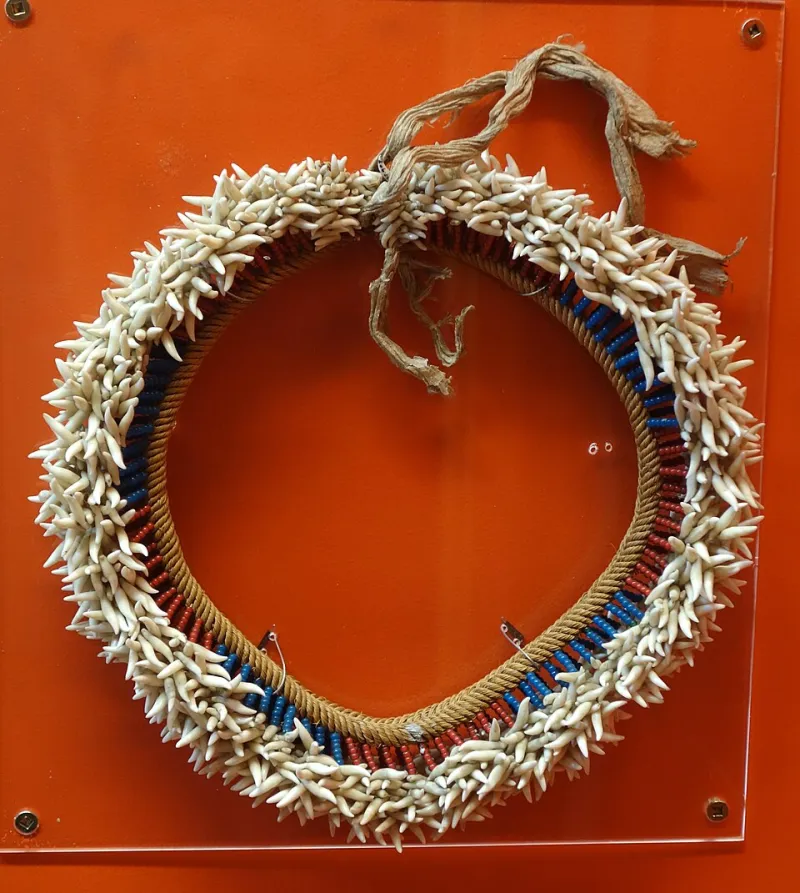
Photo: Daderot, Public domain, via Wikimedia Commons
Ask anyone in Bến Tre province what happens to a coconut after the water and flesh are harvested, and you'll likely get a puzzled look — the question assumes there's anything left to throw away. In Vietnam's so-called 'coconut capital,' the answer is: everything. The husk becomes coir fiber and pith. The shell becomes charcoal, activated carbon, or decorative paneling. The trunk, once a palm's productive years end, is milled into what locals call 'coconut timber' — a dense, pale hardwood used for trusses, flooring, and furniture.
For American homeowners watching lumber and insulation prices inch upward, this closed-loop economy isn't just an interesting curiosity. It's a preview of what a mature byproduct supply chain could do for your renovation budget.
The Whole-Fruit Supply Chain
Bến Tre processes millions of coconuts a year, and each stage of decomposition into building material carries a distinct commercial value:
- Coir fiber (from the husk) is spun into erosion-control mats, soil substrates, and — critically for builders — compressed into acoustic panels and insulation boards that resist moisture and pests.
- Coir pith, the spongy dust left after fiber extraction, becomes a lightweight aggregate in certain composite boards.
- Shell is carbonized into charcoal or pressed into hard surface materials and craft-grade veneer.
- Coconut timber from retired palms offers a straight-grained, termite-resistant alternative to conventional framing lumber in the right applications.
The economics only work because no single output has to carry the whole cost of the harvest. When every fraction of the fruit sells, the raw material for each product is essentially a byproduct — and byproducts are cheap.
The Domestic Parallel
The United States will never import its way to a fully coconut-based construction sector, nor should it. But the model is portable. American coir mats are already standard in erosion control along highways and shorelines. Coconut coir insulation boards are commercially available in Europe and increasingly in North America. Meanwhile, domestic agricultural waste — rice hulls in Arkansas and Louisiana, wheat straw across the Plains, hemp hurd in the Southeast — sits in the same underused position coconut husks occupied a generation ago.
The lesson from Bến Tre is that supply chains don't emerge from good intentions. They emerge when processors cluster geographically, when haul distances stay short, and when buyers commit to byproduct-based products even when they cost a few percent more upfront.
Back of the Napkin: A 2,000 Sq Ft Coastal Build
Let's run a rough comparison for a hypothetical 2,000 square foot single-family home in a US coastal market — think the Carolinas or the Gulf Coast.
Conventional baseline (ballpark figures):
- Fiberglass batt insulation, walls and attic: $4,500–$6,000 installed
- Interior acoustic treatment for two shared-wall rooms: $1,200
- Engineered hardwood flooring, 1,400 sq ft: $9,000–$12,000
- Erosion-control and landscaping stabilization: $2,500
Byproduct-oriented alternative:
- Coir-based insulation boards (moisture-tolerant, a genuine advantage in humid coastal assemblies): $6,500–$8,000 installed
- Coir acoustic panels: $1,000
- Coconut-timber or fast-renewable flooring: $8,500–$11,000
- Coir erosion blankets and biodegradable stabilization: $1,800
The upfront materials premium runs roughly $1,500–$2,500 — call it 3–5% of a typical materials budget. But coastal assemblies change the math. Fiberglass that gets wet in a storm or a plumbing failure often must be cut out and replaced; coir boards can often be dried and retained. That single resilience factor, multiplied across the life of the house in a flood-adjacent ZIP code, is where the premium pays itself back. Add the reduced HVAC load from higher-performing envelope assemblies, and the crossover point typically arrives within the first decade.
What Homeowners Can Actually Do
You don't need to build a new house to participate. Three practical entry points:
- Specify coir where moisture lives. Crawlspaces, bathrooms, and coastal-facing walls are the natural habitat for coir-based products. Ask your contractor for bio-based alternatives during the next envelope upgrade.
- Choose byproduct flooring. Coconut-timber and other agricultural-fiber floors compete on durability, not just ethics, and they signal exactly the kind of supply-chain demand that grows domestic processing capacity.
- Use coir in the landscape. Erosion blankets, tree-ring mulch mats, and biodegradable planter liners are the cheapest way to vote with your wallet — and they keep synthetic plastics out of your soil.
The Rent Is Real
Bến Tre's growers like to joke that a coconut pays rent its entire life — first as fruit, then as fiber, then as floor. The joke contains a serious economic insight: waste is a label we apply to materials whose supply chains we haven't finished building. American homeowners don't need to wait for those chains to mature. Every coir panel ordered and every byproduct floor installed is a small payment toward the infrastructure that will one day make 'zero-waste building' the default rather than the exception.
The coconut figured it out first. The rest of us are just catching up.