The Appraiser's Blind Spot: Why a House That Cools Itself Is Worth More Than the Numbers Say
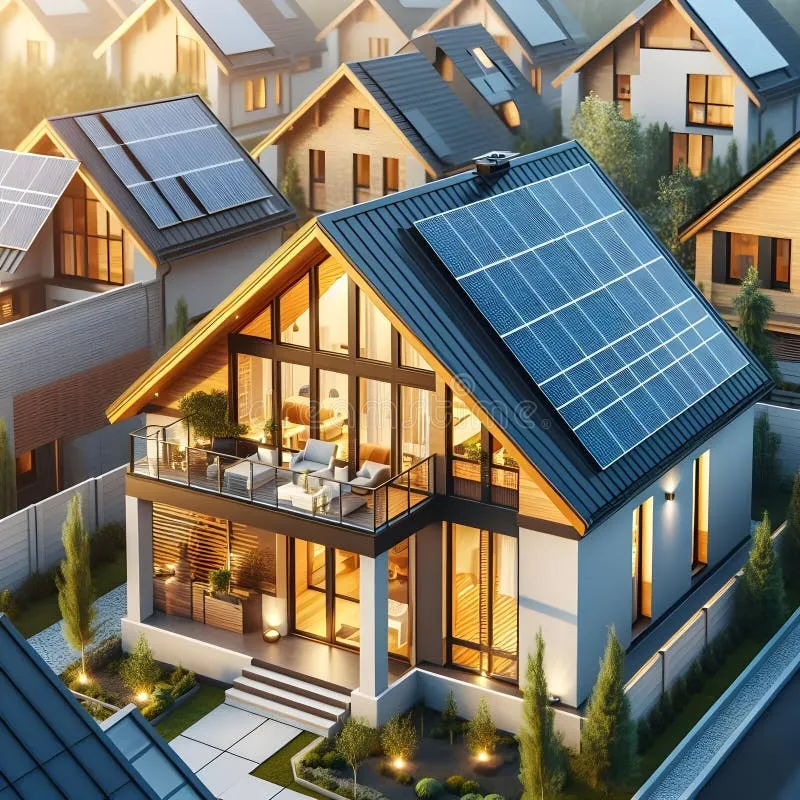
Photo: modern passive solar house with deep roof overhangs and shade trees, suburban American setting, via thumbs.dreamstime.com
There is a quiet irony at the heart of the American housing market: the house that costs the least to live in is often the hardest to finance at its true value.
A home designed to stay cool without mechanical assistance — oriented correctly, shaded deliberately, sealed and ventilated with intent — can cut cooling loads by half or more. Yet when that home is appraised, the appraiser reaches for the same three comps in the neighborhood as they would for any other house on the block. The passive features that will save the owner tens of thousands of dollars over a mortgage term are treated as curiosities, not capital.
This is what we call the green mortgage gap, and it is a problem that a small province in the Mekong Delta solved decades ago — not with software, but with common sense.
How Underwriting Fails the Passive Home
The US appraisal system is built on comparable sales. If no nearby home with a documented passive design premium has sold recently, the appraiser has no basis for adjusting the valuation upward. Energy modeling reports, blower-door tests, and utility histories — the documents that actually prove performance — rarely make it into the appraisal file.
Lenders face a parallel blind spot. Underwriting guidelines price a mortgage on the borrower's debt-to-income ratio, which includes the full utility bill. A home that avoids $200 a month in cooling costs is underwritten as if the borrower will pay them anyway. The avoided cost is invisible to the algorithm, so the borrower qualifies for less house than their true monthly burden supports.
The result is a market failure on both ends: builders hesitate to build high-performance homes they can't recoup at sale, and buyers can't borrow against savings they can't document.
What Ben Tre Understood Early
In Ben Tre, where HTX Xanh Bến Tre works, the economics of building have always included avoided costs. A house built with the prevailing breeze, shaded by its own roof overhangs, and finished with humidity-buffering lime plaster simply doesn't need the air-conditioning budget its neighbor does. Local builders, buyers, and even informal lenders have long priced that reality in. A cooler house commands a better price because everyone involved understands what the comfort is worth.
There was no appraisal reform, no certification bureaucracy. There was simply a market that had lived with the climate long enough to recognize performance when it saw it.
The American market is not there yet — but the tools to get closer already exist.
Four Steps to Document Your Home's Real Value
Homeowners and small developers can begin monetizing green performance now, before the appraisal industry fully catches up.
1. Build the performance dossier. Keep a folder — physical and digital — with your energy model, blower-door results, HVAC load calculations, and twelve months of utility bills. This is the evidence an appraiser or buyer's agent can actually use.
2. Request a green addendum. The Residential Green and Energy Efficient Addendum (developed by the Appraisal Institute) exists precisely to document features standard forms ignore. Have it completed at construction or retrofit, and hand it to your appraiser proactively.
3. Use energy mortgages where available. Products like FHA's and Fannie Mae's green refinancing options, and Energy Efficient Mortgages generally, allow utility savings to be counted in qualifying income. They are underused, in part because borrowers don't ask.
4. Work with credentialed appraisers. An appraiser with a Valuation of Sustainable Buildings (RESB) designation or equivalent training can defend an adjustment for high-performance features that a generalist cannot.
The Gap Will Close — Slowly
Secondary-market players are beginning to pilot green appraisal incentives, and utility-bill data is increasingly standardized. But regulation moves at the pace of committees, while climate and energy costs do not.
In the meantime, the burden of proof sits with the homeowner. Ben Tre's builders never needed a dossier because the whole market shared their knowledge. American owners of passive homes must carry the evidence themselves — until the day the numbers catch up with the house.