Hands Before Materials: The Hidden Workforce Behind Ben Tre's Green Homes
Photo: FBenjr123, CC BY-SA 4.0, via Wikimedia Commons
Ask most builders what makes a house 'green' and you'll hear about materials: bamboo panels, rice husk board, low-carbon concrete. Ask the cooperative builders of Ben Tre province, in Vietnam's Mekong Delta, and they'll give you a different answer. Before the material, they say, there is the hand that knows what to do with it.
That answer is easy to dismiss as philosophy. It shouldn't be. Across the United States, green building projects routinely run over budget not because the materials failed, but because the crews installing them had never worked with them before. The lesson from Ben Tre is that sustainability is a skills problem as much as a supply problem.
The Craftsman Economy of the Delta
Ben Tre sits in a coconut-growing region where building traditions evolved around what the land provides. For generations, local crews have worked with bamboo, thatch, untreated timber, and masonry techniques adapted to heat, humidity, and flooding. None of this was called 'green building.' It was simply building.
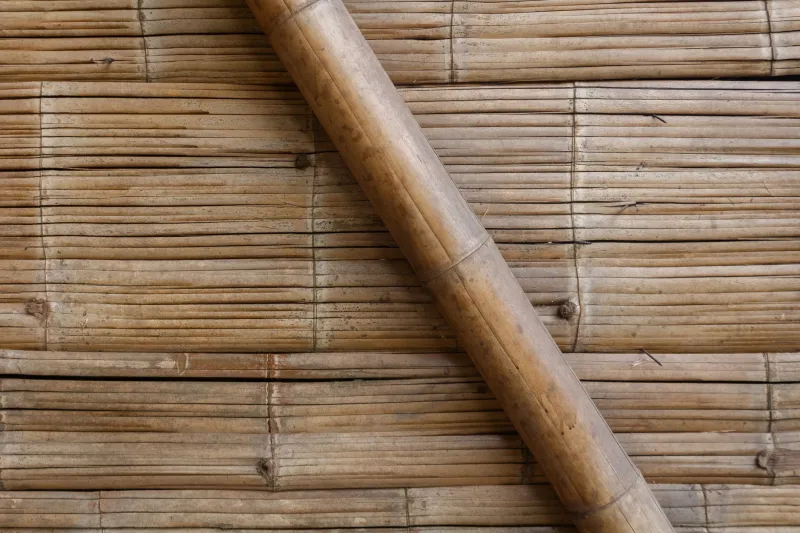
What's changed in the last two decades is the formalization of that knowledge. Cooperatives like HTX Xanh Bến Tre now run structured training for masons, bamboo weavers, and site supervisors, pairing traditional methods with modern performance standards — moisture testing, load calculations, treatment protocols for organic materials.
The result is a workforce that treats a coconut husk panel or a treated bamboo truss not as an exotic product, but as a familiar one. That familiarity has a price tag attached.
Why Imported Expertise Often Fails
In the US, a common pattern plays out on sustainable projects: the architect specifies an unfamiliar system, a general contractor bids it, and then the subcontractors learn on the homeowner's dime. Waste runs high. Rework runs higher. A 2023 industry survey found that labor and rework — not material costs — were the leading causes of budget overruns on green residential builds.
Ben Tre builders saw the same failure mode when outside firms imported 'green' expertise into the province. Crews flown in from urban centers understood certification paperwork but not local materials. Bamboo was mis-cured. Masonry was detailed for a dry climate in a monsoon one. The projects that succeeded were the ones where local hands led and outside consultants advised.
The inversion matters for American readers: the expertise that counts is the kind embedded in a place and its materials, not the kind that arrives with a certificate.
What Training Actually Saves
Consider the economics. A trained bamboo-framing crew in Ben Tre can erect a small residential structure in a fraction of the time an untrained crew needs, with far less cutting waste. Locally trained masons know how to detail a wall for driving rain without adding layers of synthetic membrane — an approach that lowers both cost and embodied carbon.
For US builders, the parallel is direct. Investing in crew training for mass timber, earthen finishes, or hempcrete is not a soft expense. It's the difference between a green build that hits its budget and one that becomes a cautionary tale. A few thousand dollars in training often protects tens of thousands in avoided rework.
Three Takeaways for American Builders
Train before you specify. If your design depends on a material your crew has never touched, budget for training and practice assemblies before the first wall goes up.
Hire for adaptability, not just certifications. A crew experienced with local, climate-adapted building often outperforms one holding paperwork for systems that don't fit the site.
Treat craftsmanship as infrastructure. Ben Tre's cooperatives treat skill development the way American firms treat equipment purchases — as a long-term capital investment. The payoff compounds across every subsequent project.
The Human Foundation
Sustainable construction gets marketed as a technology story, but in Ben Tre it has always been a human one. The province's greenest homes stand not because they used the right panels, but because the people who built them understood the material, the climate, and the craft.
As American builders chase lower-carbon construction, the question worth asking isn't only what to build with. It's who will build it — and whether they've been given the skills to do it right the first time.